 INDUSTRLAL electronic


What parameters should be considered when selecting anti-interference capacitors?
2026-10-08 14:04:48
To effectively resolve issues such as electromagnetic interference, signal fluctuations, and system crashes in industrial circuits and precision electronic equipment, selecting the right anti-interference capacitor is crucial. Many enterprises focus solely on capacitance values during component selection while overlooking critical indicators like voltage rating, frequency characteristics, and material composition; this often results in poor noise suppression, a shortened service life, and frequent equipment failures.
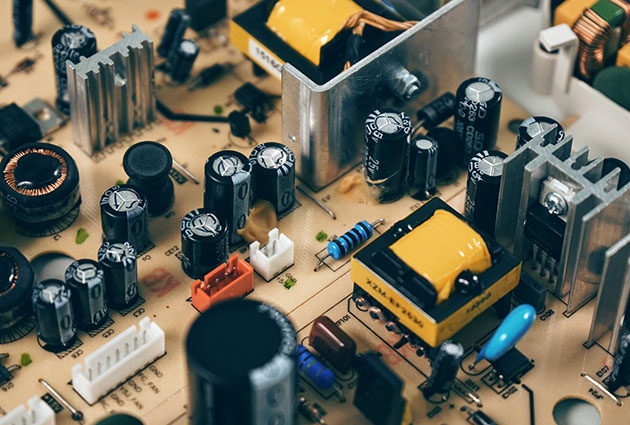
The voltage rating is the primary consideration; the rated voltage should be 1.2 to 1.5 times the circuit's actual operating voltage to prevent breakdown damage caused by high voltage. Capacitors rated at 100V, 250V, or 400V are preferred for industrial high-voltage circuits, whereas 50V or 63V specifications are suitable for low-voltage precision circuits. Next, consider capacitance: low-capacitance values (0.1μF, 0.22μF) are appropriate for high-frequency interference scenarios, while higher-capacitance models (1μF–10μF) are suitable for filtering low-frequency noise.
Material selection is also vital. Film capacitors offer high-temperature and aging resistance, making them ideal for harsh operating conditions such as those found in power tools and industrial motors. Ceramic capacitors excel in high-frequency performance, making them suitable for high-precision circuits involving chips and precision circuit boards. Furthermore, selection should be based on the type of interference: X-capacitors suppress differential-mode interference, while Y-capacitors block common-mode interference; combining them according to specific needs yields the best results.
Finally, factors such as package size and temperature tolerance must be considered to ensure compatibility with the equipment's installation space and operating environment, avoiding haphazard selection. Choosing compliant, high-quality capacitors can effectively enhance a device's electromagnetic compatibility and reduce the likelihood of failure.

 Scan code 5 seconds